Sports tournaments and championships are exciting events that bring together teams or athletes to compete for titles, trophies, and recognition. From local competitions to global events like world championships, tournaments follow specific structures to ensure fairness, excitement, and clear winners.
Understanding how sports tournaments and championships are structured helps fans enjoy competitions more and helps athletes understand the path to success. In this article, we explain the most common tournament formats in simple terms and how they work.
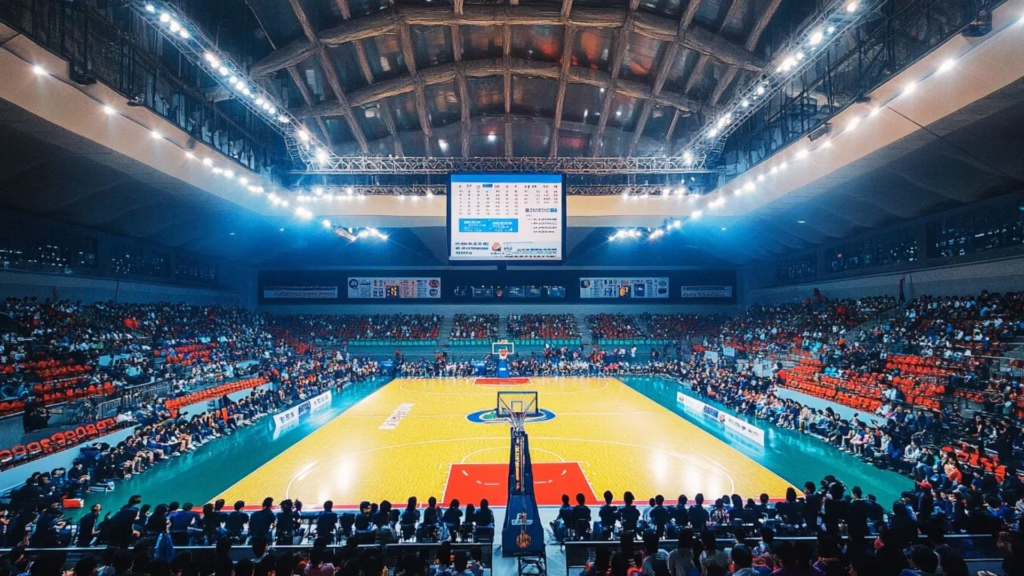
What Is a Sports Tournament?
A sports tournament is an organized competition where multiple teams or athletes compete over a period of time. The goal is to determine a winner through a series of matches, games, or events.
Tournaments are used in:
- Team sports
- Individual sports
- Amateur and professional levels
Each tournament follows a planned structure to manage competition fairly.
Why Tournament Structure Matters
Structure creates order and fairness.
A good structure:
- Ensures equal opportunity
- Keeps competition organized
- Builds excitement
- Helps determine the best performer
Without structure, competitions would be confusing and unfair.
1. Single-Elimination Tournaments
Single-elimination is one of the simplest formats.
How it works:
- Lose once and you are out
- Winners advance to the next round
- Final winner remains undefeated
Examples:
- Knockout cups
- Playoff rounds
This format is fast and exciting but gives little room for mistakes.
2. Double-Elimination Tournaments
Double-elimination allows one loss.
How it works:
- Teams are eliminated after two losses
- One main bracket and one second-chance bracket
Benefits:
- Fairer than single-elimination
- Gives strong teams a second opportunity
Common in esports and some amateur competitions.
3. Round-Robin Tournaments
Round-robin focuses on consistency.
How it works:
- Every team plays every other team
- Points are awarded for wins and draws
- Highest points win
Benefits:
- Fair evaluation of performance
- Less chance of luck deciding results
Often used in leagues and group stages.
4. Group Stage Followed by Knockouts
This is a very popular format.
How it works:
- Teams are divided into groups
- Round-robin matches within groups
- Top teams advance to knockout rounds
Benefits:
- Combines fairness and excitement
- Allows multiple matches per team
Used in major tournaments like world championships.
You Can Also Read: common-sports-injuries-treatment
5. League Format (Season-Based Championships)
Leagues run over long periods.
How it works:
- Teams play each other multiple times
- Points are accumulated over a season
- Champion is the team with most points
Examples:
- Football leagues
- Basketball leagues
Consistency matters more than short-term performance.
6. Playoffs and Finals
Playoffs decide champions after leagues.
How playoffs work:
- Top teams qualify
- Matches are usually elimination-based
- Final determines champion
Playoffs add excitement to league competitions.
7. Best-of Series
Some tournaments use series instead of single games.
Common formats:
- Best-of-3
- Best-of-5
- Best-of-7
Benefits:
- Reduces randomness
- Rewards consistent performance
Used often in basketball, baseball, and esports.
8. Qualification Rounds
Large tournaments need qualification stages.
Purpose:
- Reduce number of participants
- Ensure competitive balance
Examples:
- Regional qualifiers
- Preliminary rounds
Only qualified teams reach main tournaments.
9. Seedings in Tournaments
Seeding ranks teams before competition.
Why seeding matters:
- Strong teams avoid early matchups
- Balanced brackets
Seeding is based on rankings or past results.
10. Home and Away Format
Some tournaments use two-leg matches.
How it works:
- Teams play once at each venue
- Aggregate score decides winner
This balances home advantage.
11. Neutral Venue Championships
Finals are often played at neutral venues.
Benefits:
- Fairness
- Equal fan access
- Special event atmosphere
Neutral venues reduce bias.
12. Individual Sports Tournament Structure
Individual sports also use structured formats.
Examples:
- Tennis tournaments
- Golf championships
- Athletics events
Formats include knockout rounds, heats, and finals.
13. Ranking and Point Systems
Points decide standings.
Points are awarded for:
- Wins
- Draws
- Placements
Clear systems ensure transparency.
14. Tie-Breaking Rules
Ties must be resolved.
Common tie-breakers:
- Goal difference
- Head-to-head results
- Extra time or penalty shootouts
Rules are set before tournaments begin.
15. Championship Finals
Finals decide ultimate winners.
Finals are:
- Highly promoted
- Often single matches or series
- Watched by large audiences
They are the highlight of tournaments.
Sports Tournaments, Insight, and Competition Awareness
Understanding tournament structures helps fans appreciate strategy and planning behind competitions. Platforms like
PAUSHOKI encourage sports awareness, structured insight, and appreciation of competitive formats—qualities that align closely with understanding how sports tournaments and championships are organized.
How Tournament Structure Affects Strategy
Teams adjust tactics.
Strategy depends on:
- Number of matches
- Elimination risk
- Point systems
Structure shapes how teams play.
Benefits of Well-Designed Tournaments
Good structure improves sports quality.
Benefits include:
- Fair competition
- Viewer excitement
- Clear champions
Well-planned tournaments attract fans and sponsors.
Common Challenges in Tournament Organization
Organizers face difficulties.
Challenges include:
- Scheduling
- Travel logistics
- Weather conditions
- Fair officiating
Strong planning reduces issues.
Why Fans Should Understand Tournament Formats
Knowledge improves enjoyment.
Fans benefit by:
- Following standings
- Understanding match importance
- Appreciating strategy
Informed fans enjoy sports more.
Final Thoughts
Sports tournaments and championships are carefully structured to balance fairness, excitement, and competition. From group stages to knockout rounds and finals, each format serves a purpose in identifying the best teams or athletes.
Understanding these structures helps fans follow competitions more closely and helps athletes prepare effectively. Tournaments are not random—they are designed to reward consistency, skill, and performance under pressure.
In sports, structure creates the stage where greatness is revealed.